Kevin IPTV Technology
The most advanced IPTV infrastructure in 2026. Anti-Freeze engine, 8K H.265 encoding, adaptive bitrate, multi-region CDN, and 99.9% uptime guarantee. Built for flawless streaming on any device.
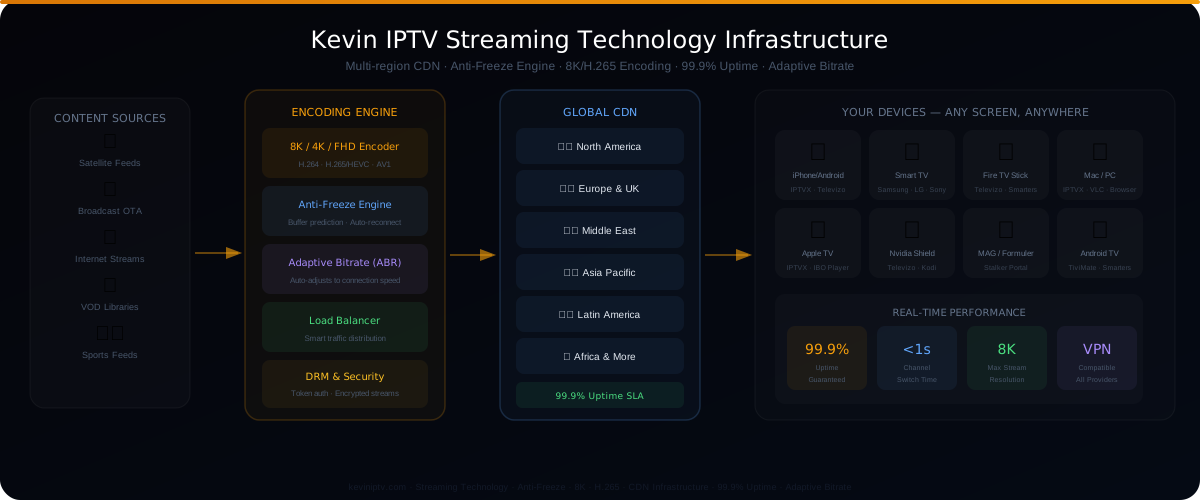
Kevin IPTV Technology Stack
Six core technologies working together to deliver the best IPTV experience
Anti-Freeze Engine
- ✓ Predictive buffer pre-loading
- ✓ Real-time connection monitoring
- ✓ Auto-reconnect on drop
- ✓ Zero-interruption recovery
- ✓ Buffer size optimization
8K / 4K Encoding
- ✓ H.265/HEVC for 4K & 8K
- ✓ H.264/AVC for HD streams
- ✓ AV1 next-gen codec
- ✓ HDR10 & Dolby Vision
- ✓ Hardware-accelerated decode
Adaptive Bitrate
- ✓ Auto quality adjustment
- ✓ No manual configuration
- ✓ Smooth transitions
- ✓ Buffer-less switching
- ✓ 5 quality tiers
Multi-Region CDN
- ✓ 6 global CDN regions
- ✓ <30ms latency worldwide
- ✓ Automatic geo-routing
- ✓ Failover in milliseconds
- ✓ 99.9% uptime SLA
Security & Auth
- ✓ Token-based stream auth
- ✓ Xtream Codes encryption
- ✓ Per-account credentials
- ✓ Anti-piracy protection
- ✓ Secure HTTPS delivery
Load Balancing
- ✓ Smart traffic distribution
- ✓ Peak-hour optimization
- ✓ Auto-scaling servers
- ✓ Zero single point of failure
- ✓ 24/7 infrastructure monitoring
Anti-Freeze IPTV Technology Explained
The most common complaint with IPTV is freezing and buffering. Kevin IPTV's proprietary Anti-Freeze engine eliminates this problem.
Our engine runs a predictive algorithm that monitors your connection speed every 500ms. It pre-loads the next 30 seconds of stream content into a buffer before you need it. If your connection drops momentarily (a common WiFi issue), the buffer keeps playing while the stream reconnects.
The result: you never see a spinning loading wheel, even on 3G mobile connections or congested WiFi networks.
Video Encoding — H.265, H.264 & AV1
Kevin IPTV uses the latest video codecs for maximum quality at minimum bandwidth
H.265 / HEVC
High Efficiency Video Coding. Streams 4K at 15–25 Mbps instead of H.264's 50 Mbps. Required for 8K content.
H.264 / AVC
Advanced Video Coding. The most widely supported codec. Works on every device from 2010 onwards. Used for standard HD channels.
AV1
Next-generation open codec developed by Google. 30% more efficient than H.265. Used for VOD content on modern devices.
Global CDN — 6 Regions, Zero Lag
Kevin IPTV's multi-region content delivery network ensures low latency from anywhere in the world
Our multi-region failover architecture means no single server failure can affect your viewing. 24/7 infrastructure monitoring with under 1 minute incident response time.
Internet Speed Requirements
Kevin IPTV works on any connection. Here's what you need for each quality level:
| Quality | Resolution | Min Speed | Recommended | Codec |
|---|---|---|---|---|
| SD | 480p | 3 Mbps | 5 Mbps | H.264 |
| HD | 720p | 5 Mbps | 10 Mbps | H.264 |
| FHD | 1080p | 10 Mbps | 15 Mbps | H.264/H.265 |
| 4K | 2160p | 25 Mbps | 35 Mbps | H.265 |
| 8K | 4320p | 50 Mbps | 80 Mbps | H.265 |
All speeds are per-stream. Multiply by number of simultaneous connections for multi-device households.
Compatible IPTV Apps & Devices
Kevin IPTV technology works with every major IPTV player and device
Kevin IPTV Technology — FAQ
Technical questions answered about Kevin IPTV's streaming infrastructure
Frequently Asked Questions
Everything you need to know about Kevin IPTV subscription service.
Experience the Most Advanced IPTV Technology
Anti-freeze · 8K · 99.9% uptime · 6 CDN regions · $4.08/month · 24/7 support
Get Kevin IPTV — From $49/Year →